
Safety
Invasive plant management can expose volunteers to a variety of hazards. Staying safe begins with awareness, preparation, and the right protective gear.
Emergency Preparedness
-
Know your exact location (park name, trail, or landmark).
-
Carry a first aid kit and cell phone.
- In case of emergency: Call 911, then alert your event leader.
Common Hazards
Environmental & Biological
- Tick-borne diseases
- Stinging or biting insects
- Snake bites (Note: Copperheads are the only venomous species in Fairfax County)
- Poison ivy
- Thorns
- Sunburn
Physical & Tool-Related
- Slips, trips, and falls
- Injuries from tools
- Falling trees or branches (Never pull vines off trees — you could pull down a branch!)
- Getting poked in the eye by a branch
- Heat-related illness
- Human encounters
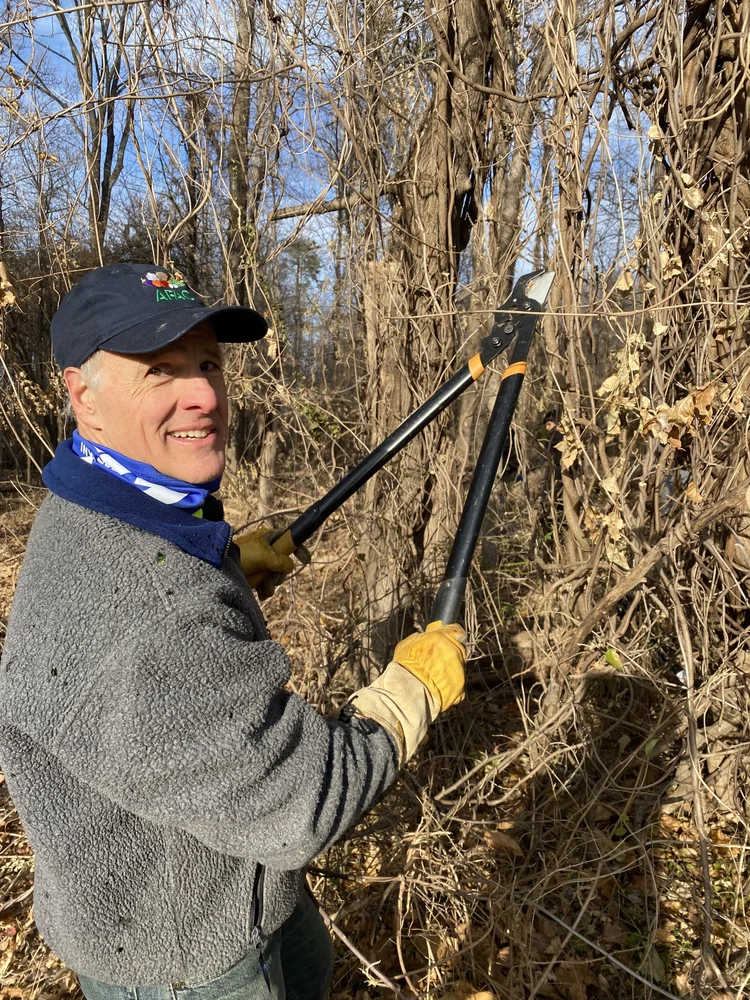
Protective Personal Gear
Minimum requirements for all volunteers:
- Long-sleeved shirts
- Long pants tucked into socks
- Closed-toe shoes
- Gloves (thorn-proof preferred)
Highly recommended:
- Hat or cap
- Eye protection
- Sunscreen
- Insect repellent (with DEET)
Remember: Proper gear is your first line of defense.